Free Printable Chore Chart & Tips to Be Successful
This post may contain affiliate links for your convenience. Read my full disclosure policy here.
A free printable chore chart plus simple tips to help you set it up in a way that actually works for your kids and your family.
If there is one thing I have learned about getting kids to help around the house, it is this: Having chores is good for kids. Getting kids to actually do those chores? That’s a whole different story.
One often-cited University of Minnesota study found that, among the factors they examined, one of the strongest predictors of success in young adulthood was whether children had participated in household tasks when they were young. The researchers found that children who started helping around the house at ages 3 or 4 were more likely to have positive outcomes in their mid-20s, including completing their education, establishing a career path, and having positive relationships.
That’s pretty compelling, right?
Let me warn you ahead of time, though. Even though this information is GOLD and makes an amazing argument for chores, your kids will probably not be impressed. Trust me. I’ve gotten many an eye roll when I’ve reminded my kids that the chores they are complaining about are helping prepare them for a successful life.
But jokes aside, chores really can help kids develop responsibility, confidence, independence and a sense that they are an important part of the family. Research has also found an association between household chores and children’s sense of competence.
So how do you actually set up a chore system that works? That’s where things get a little trickier.

How Many Chores Should My Child Have?
This is one of those parenting questions where I wish I could give you a nice, neat answer. But the truth is that every child is different. The number of chores one child can reasonably handle at a particular age may be completely different from what another child can manage.
When deciding how much responsibility to give your child, consider things like:
- Their age
- Their developmental readiness
- Their attention span
- Their personality
- Their ability to follow multi-step directions
- Their school workload
- Their extracurricular activities
- Any neurodivergence or learning differences
- How much help they still need from you
And one of the most important things I can tell you when setting up a chore system is be flexible. Maybe you thought your child could handle six chores a week, but after trying it for a couple of weeks, everyone is miserable. That’s okay. Change the plan.
Maybe they need fewer chores. Maybe they need more specific instructions. Maybe one of the chores is harder than you realized. Maybe the timing doesn’t work. A chore system is supposed to make family life easier, not become another source of frustration. Start somewhere and adjust as you go.
How Do I Keep Track of Chores?
This is where a chore chart can be incredibly helpful. Kids don’t have to remember what they are supposed to do every single day, and you don’t have to repeat the same list of chores approximately 47 times.
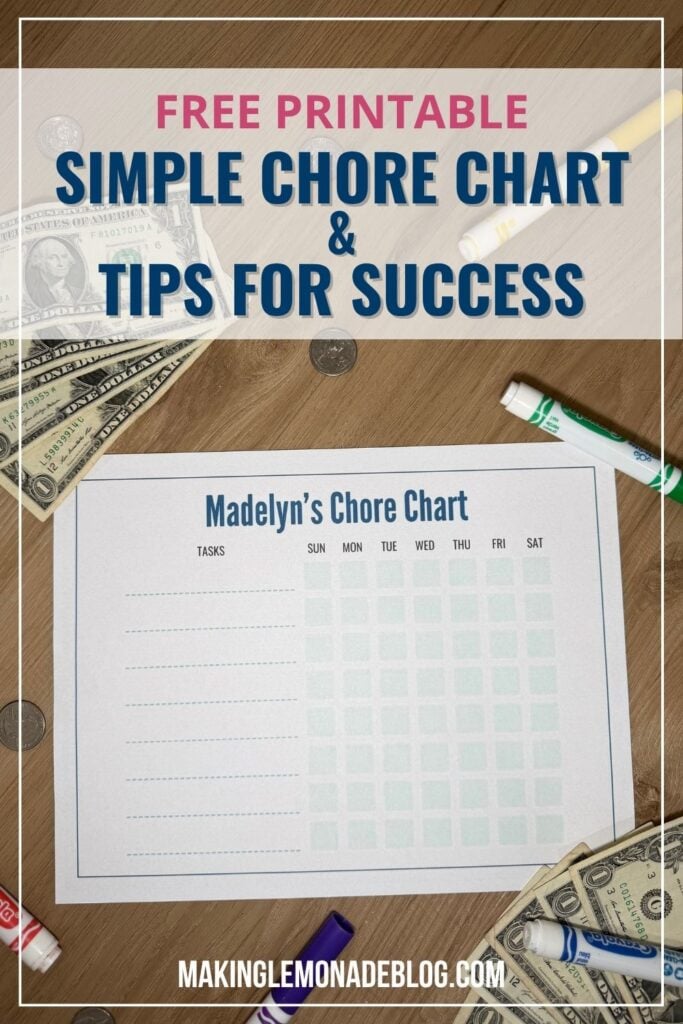
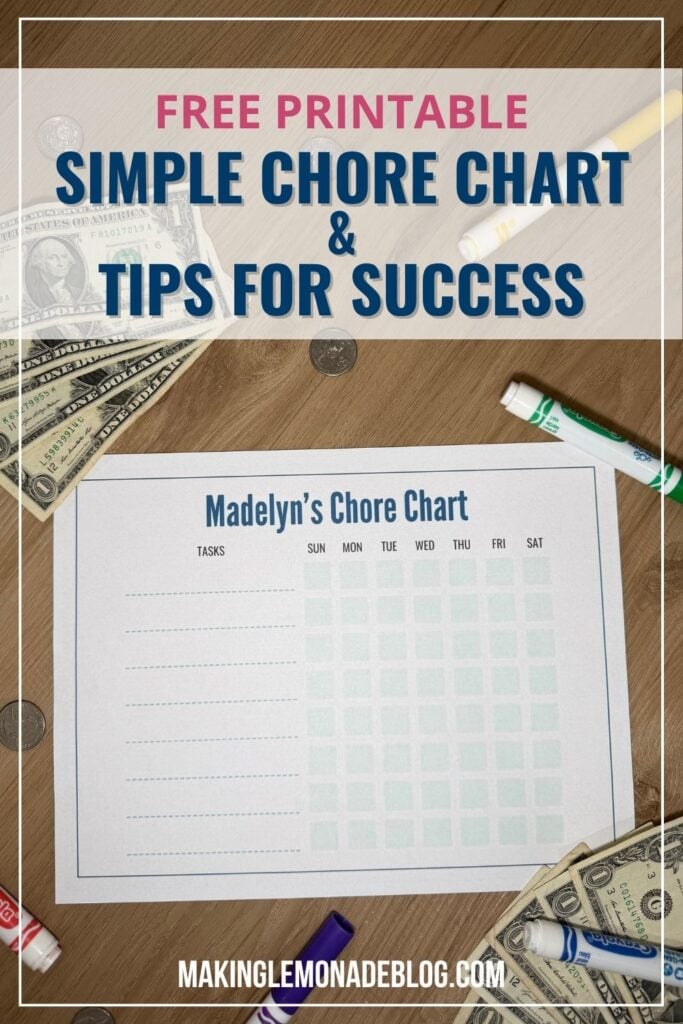
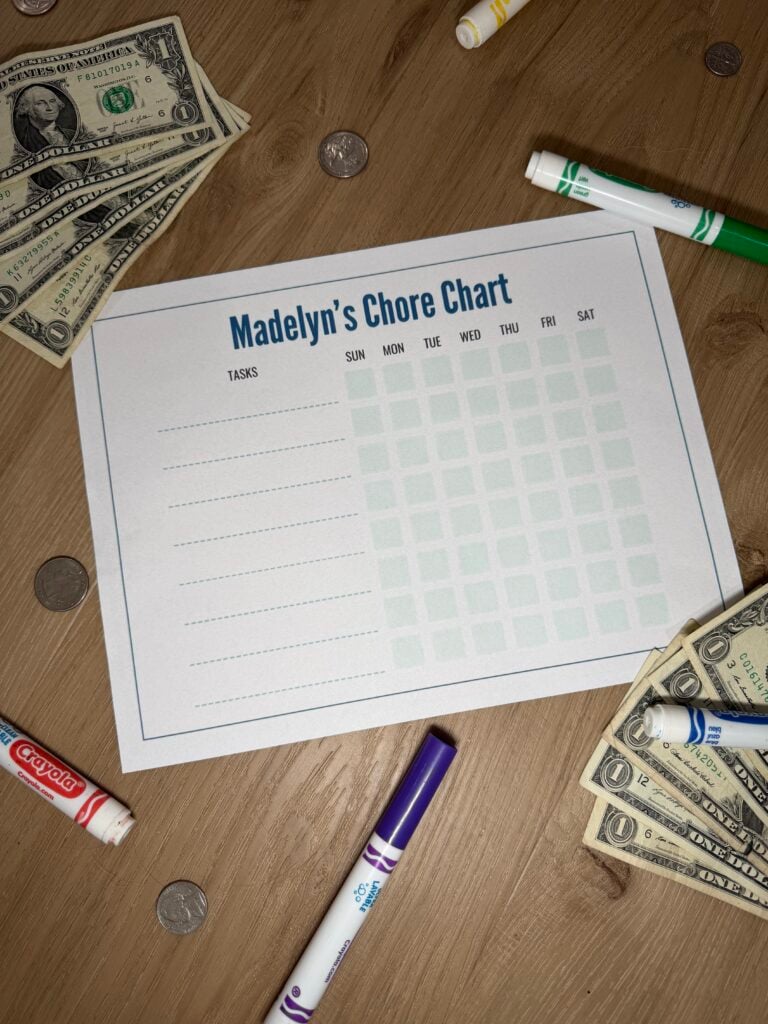
I’ve created two free printable chore charts to make this easier. The younger kids’ version has 5 spaces for chores, which is a great starting point for kids who are just learning how to take responsibility for household tasks. The older kids’ version has 8 spaces for chores, giving you room to add a little more responsibility as your child grows.
Print two copies of the free printable chore chart. Use one copy as the parent planning sheet. Mark which days you want your child to complete each chore and hang it somewhere visible.
Then take the second copy of the free printable chore chart and laminate it. Your child can use a dry erase marker to check off each chore as they complete it. At the end of the week, wipe it clean and start again.
Should I Pay My Kids for Chores?
Ah, the great chore debate. Should kids get paid for helping around the house? There isn’t one universally agreed-upon answer, and research doesn’t give us a simple “yes” or “no.”
Some research has raised concerns that tying children’s household contributions too closely to payment can shift the focus from contributing to the family toward completing a transaction. Other experts point out that rewards, including money or privileges, can sometimes be useful motivational tools, particularly when expectations are clear and agreed upon ahead of time.
Personally, I think there is room for both.
You can teach kids that some responsibilities are simply part of being a member of the family while also giving them opportunities to earn money through additional jobs.
For example, everyday responsibilities might include:
- Making their bed
- Feeding pets
- Putting away their belongings
- Clearing their dishes
- Helping clean up after dinner
Then you might have extra jobs that they can choose to do for money, such as:
- Washing the car
- Cleaning out the garage
- Pulling weeds
- Washing windows
- Helping with a larger organizing project
That way, kids learn both “we all contribute to our family” and “extra work can be a way to earn money.”
Other Ways to Motivate Kids to Do Chores
Money isn’t the only incentive you can use. In our house, screen time comes after chores. It’s not a punishment, although my kids might disagree. It’s just the order of things: Responsibilities first. Fun second.
When Should My Child Do Their Chores?
Think about your family’s actual schedule. Does your child have soccer practice three afternoons a week? Do they have homework? Do they have music lessons? Are there certain nights when your family doesn’t get home until late? Those things matter.
For example, my son does competitive robotics for three hours on Tuesday nights. There is no way I’m going to pile a bunch of chores onto that night. His Tuesday responsibilities are limited to his regular daily chores, which include feeding our animals, picking up his room and helping clean up after dinner. That’s it.
The goal isn’t to see how many chores I can squeeze into his schedule. The goal is to teach him how to contribute consistently while still allowing him to have a childhood.
What Are Age-Appropriate Chores for Kids?
Again, age is a starting point, not a rule. A four-year-old might be perfectly capable of putting away toys and helping feed a pet, while another four-year-old may need more help.
Here are some general ideas:
Ages 2–4
Keep chores simple.
- Put toys away
- Put clothes in the hamper
- Help put books away
- Help wipe up small spills
- Put shoes in their designated spot
- Help feed a pet with supervision
Ages 5–7
Kids can begin taking ownership of simple daily responsibilities.
- Make their bed
- Put away toys and belongings
- Set the table
- Clear their plate
- Feed pets
- Put dirty clothes in the hamper
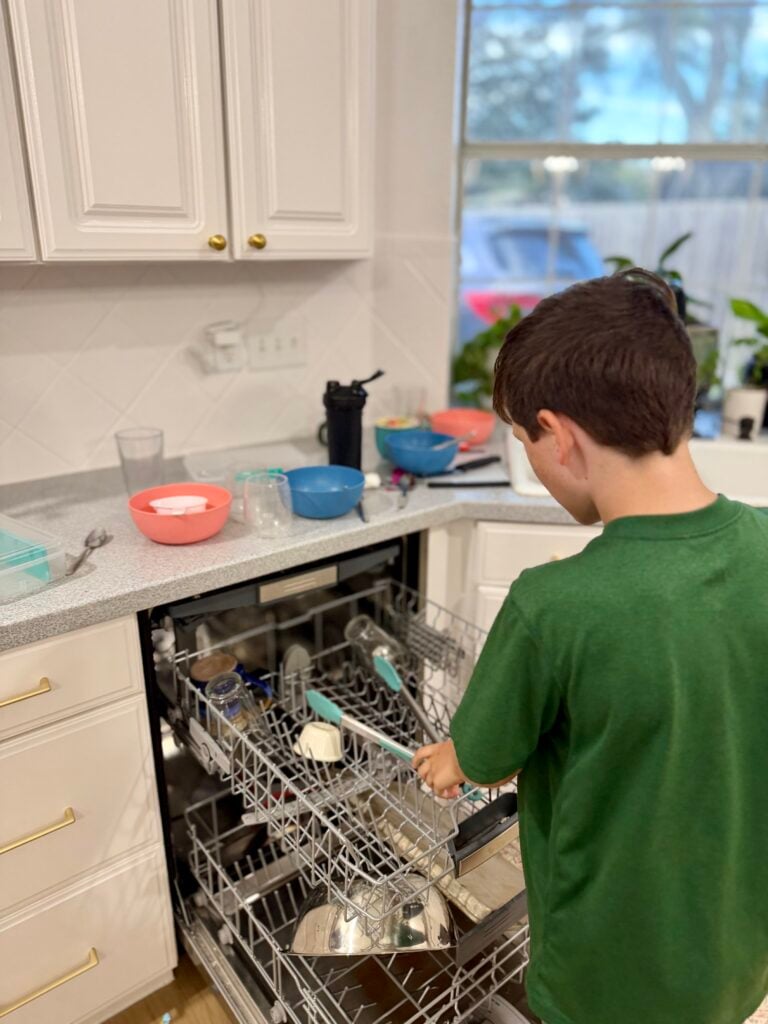
- Help unload part of the dishwasher
- Dust
- Water plants
Ages 8–10
You can begin adding more independent tasks.
- Make their bed
- Clean their room
- Unload the dishwasher
- Take out small trash cans
- Sweep
- Wipe counters
- Fold and put away laundry
- Help with yard work
- Feed and care for pets
Ages 11–13
Older kids can start taking responsibility for more involved household tasks.
- Do their own laundry
- Vacuum
- Clean bathrooms
- Mop
- Take out the trash
- Load and unload the dishwasher
- Prepare simple meals
- Help with yard work
- Organize their room and belongings
Teenagers
The goal should gradually shift toward independence.
- Do their own laundry
- Clean their bathroom
- Vacuum and mop
- Help prepare meals
- Wash dishes
- Take out trash and recycling
- Help with yard work
- Clean shared spaces
- Babysit younger siblings when appropriate
- Take responsibility for keeping their personal spaces organized
Don’t get too hung up on the age ranges. The goal is progress, not perfection.
How Long Will It Take My Child to Get the Hang of Their Chores?
Probably longer than you want it to. Sorry. But this is another area where consistency matters more than perfection. Research on habit formation found that the amount of time it takes for a behavior to become automatic varies considerably from person to person. In one study, it ranged from 18 to 254 days, with consistency and repetition helping the behavior become more automatic.
So don’t expect your child to magically remember their chores after three days. For some kids, it may take several weeks before a new responsibility starts feeling routine. For others, it may take several months.
Keep reminding them, practicing and keep the expectations consistent. And don’t assume that needing reminders means the system isn’t working. You’re teaching a habit and that takes time.
How Can I Make Chores More Fun?
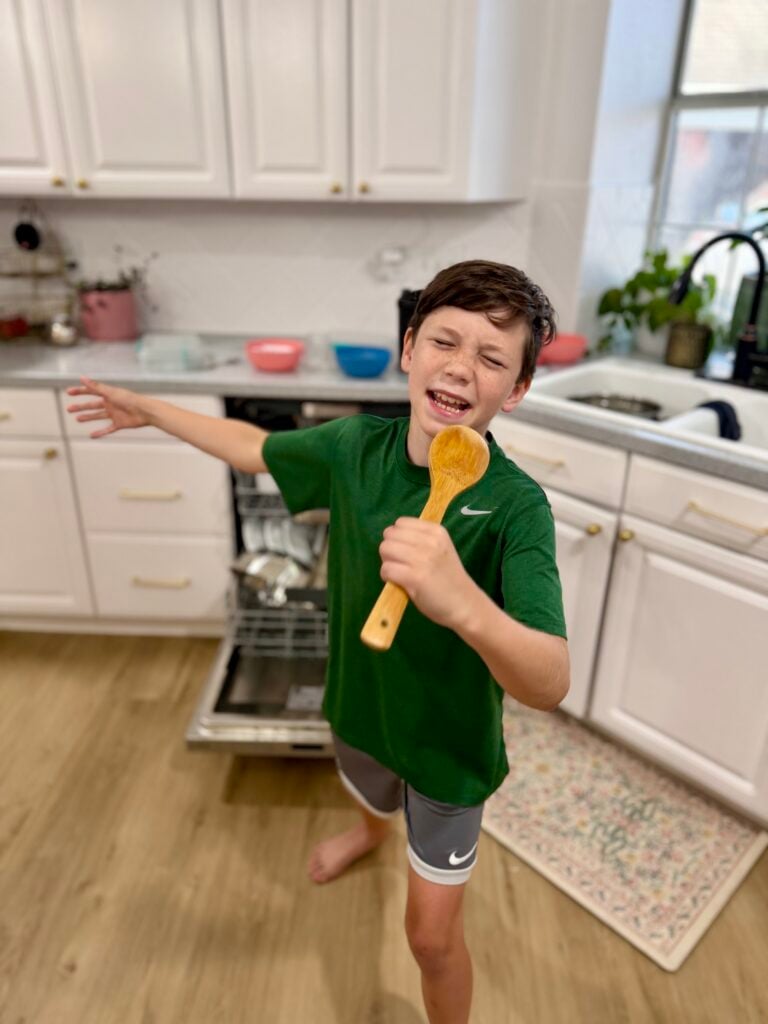
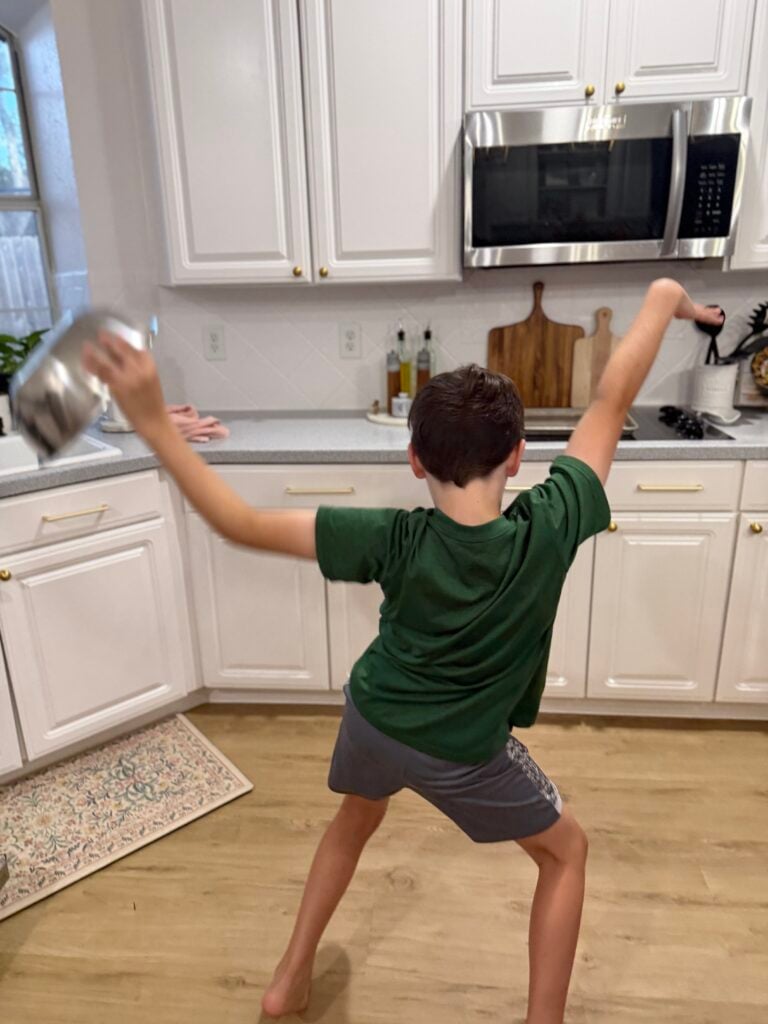
Music is my favorite way to make chores less drab. After dinner I turn on some music and our family cleans up together. I put things away and clear the counters. My kids take turns each night unloading the dishwasher or wiping down the table and counters. My husband loads the dishwasher.
Everyone dances. Everyone sings. Nobody is pretending that unloading the dishwasher is the most exciting thing they’ve ever done, but somehow it makes the whole thing feel like a lot less work.
And honestly, I think that’s an important part of teaching kids about chores. Chores don’t always have to be miserable. Sometimes they’re just something we do together.
You can also try:
- Having a family clean-up playlist
- Setting a timer and seeing how much you can accomplish
- Letting your child choose the music
- Doing chores alongside your child
- Having a family “10-minute tidy”
- Turning cleanup into a race
- Listening to an audiobook or podcast during appropriate chores
- Celebrating when everyone finishes
You don’t have to make everything a game, but a little fun can go a long way.
Don’t Forget to Teach the Chore
One of the biggest mistakes we can make with chores is assuming that our kids know how to do them. We say, “Clean your room!” and then get frustrated when we come back to find that they shoved everything under the bed.
What seems obvious to us may not be obvious to them. Instead of saying “clean the kitchen,” break it down:
- Put dirty dishes in the dishwasher.
- Put food away.
- Wipe the table.
- Wipe the counters.
- Sweep the floor.
The more specific the expectation, the easier it is for your child to understand what “done” actually means. This can be especially helpful for children who struggle with attention, executive functioning or multi-step directions. And be ready to teach a chore more than once. Most kids need lots of practice to master a chore.
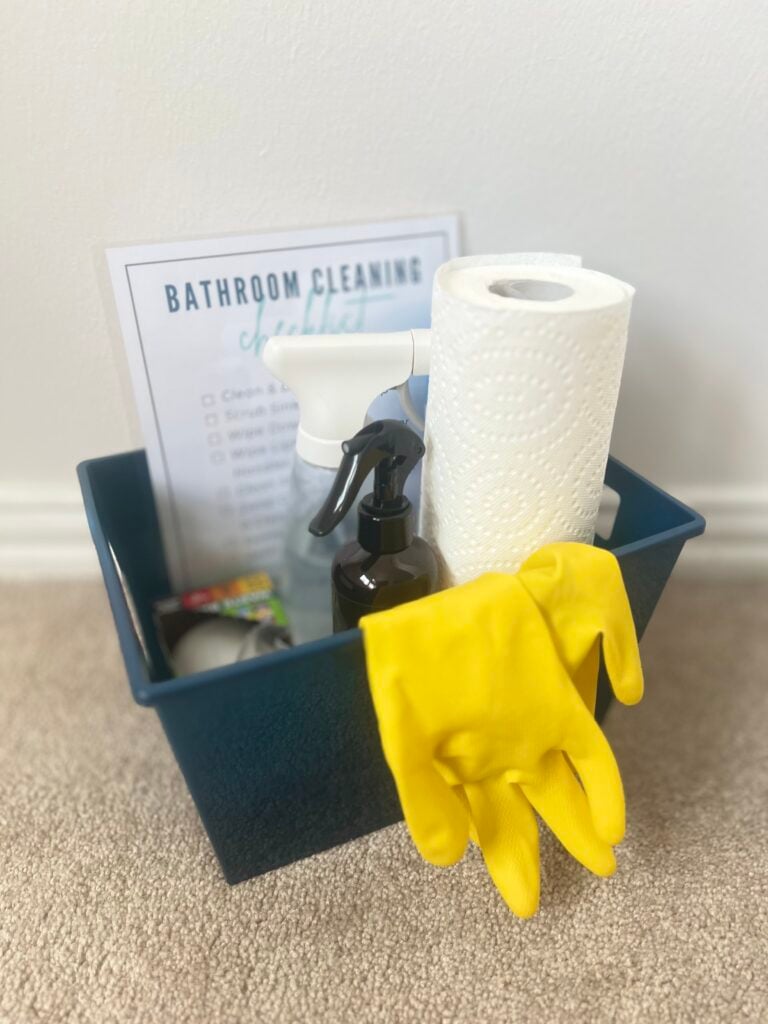
If you’re looking for help “teaching the chore” then this Kids’ Bedroom Cleaning Checklist and Bathroom Cleaning Checklist might be really useful. Both resources are free!
Start Small
If your family doesn’t currently have a chore routine, you don’t need to suddenly create a giant list of responsibilities tomorrow. Start with one or two things, get those down and then add another. The best chore system is the one your family can actually stick with.
That’s why I created this simple free printable chore chart. There is a 5-task version for younger kids and an 8-task version for older kids, so you can choose the one that makes sense for your child right now.
Print one for planning and laminate one for your child to use throughout the week to mark completed tasks.
And remember: Your child doesn’t have to love chores. They just need to learn that being part of a family means pitching in. Even if that comes with an occasional eye roll.
Get the Free Printable Chore Chart
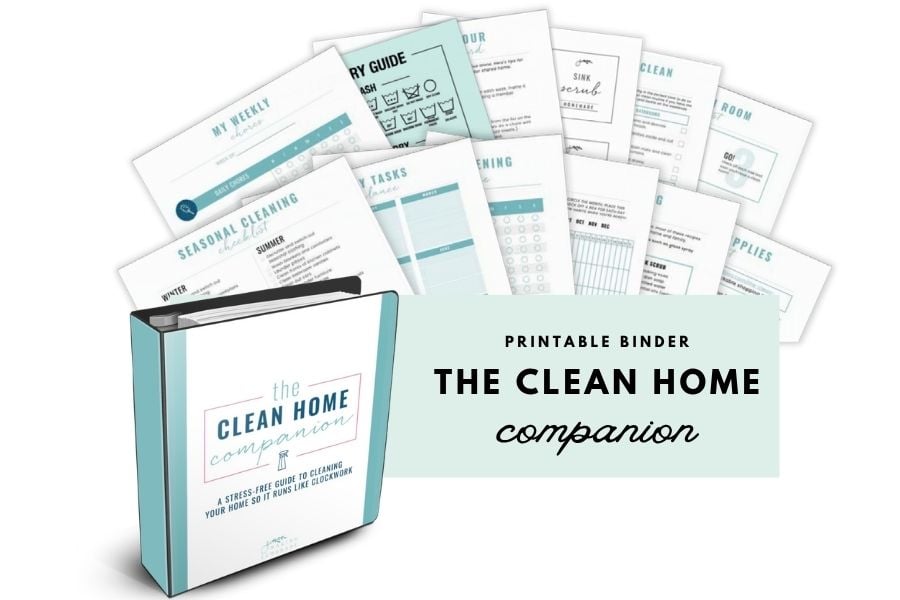
The Clean Home Companion that will Change your Life
If you’re looking for more than just a chore chart and want a complete system for keeping your home clean and organized, the Clean Home Companion Printable Binder is for you. It walks you through a simple, step by step plan to create an efficient cleaning system that works for your home and makes keeping up with it feel much more manageable.