6 Simple Tips for Creating Thriving Container Gardens
This post may contain affiliate links for your convenience. Read my full disclosure policy here.
Create stunning and thriving container gardens with these simple yet effective tips. From choosing the right containers and soil to selecting the perfect plants and providing proper care, these guidelines will help your outdoor planters flourish all season long.
If you’re looking for more gardening inspiration, check out my post on Vertical Herb Gardens or learn how to make your own Homemade Natural Bug Spray for Plants.
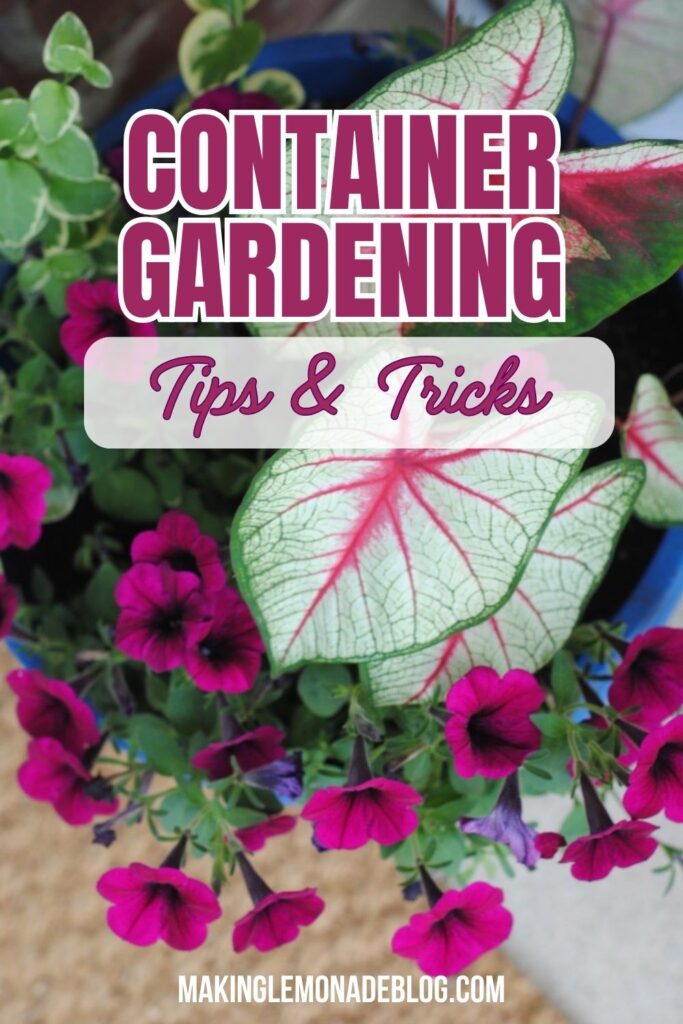
Over the past few years, I’ve followed a simple formula for planting my outdoor container gardens, and it’s worked like a charm. There’s something so satisfying about creating a beautiful container garden—it instantly adds charm, color, and life to any outdoor space. If you’ve ever wondered what to plant in an outdoor planter (or how to make it look effortlessly beautiful), I’ve got you covered. Also, three plants are all it takes to create a stunning, full planter—so read on for the secret!
1. Consider Your Lighting Conditions & Climate Zone
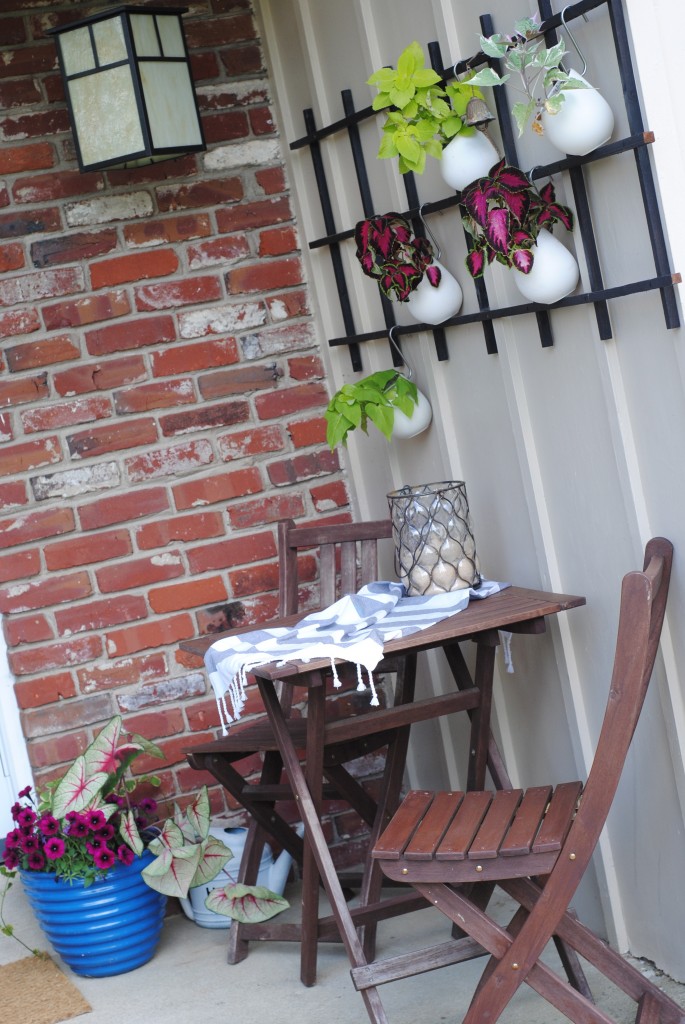
Before you start shopping for plants, it’s essential to assess the lighting conditions your planters will receive. Understanding whether your containers will be exposed to full sun, partial shade, or full shade will help you choose the right plants for the right conditions. For example, this is my shade collection. These plants thrive in partial light and shade, making them a perfect fit for my entryway, which gets very little direct sunlight. Additionally, it’s important to consider your climate zone when selecting plants. Knowing which USDA hardiness zone you’re in ensures you choose plants that are suited to your local weather conditions, giving them the best chance to thrive.
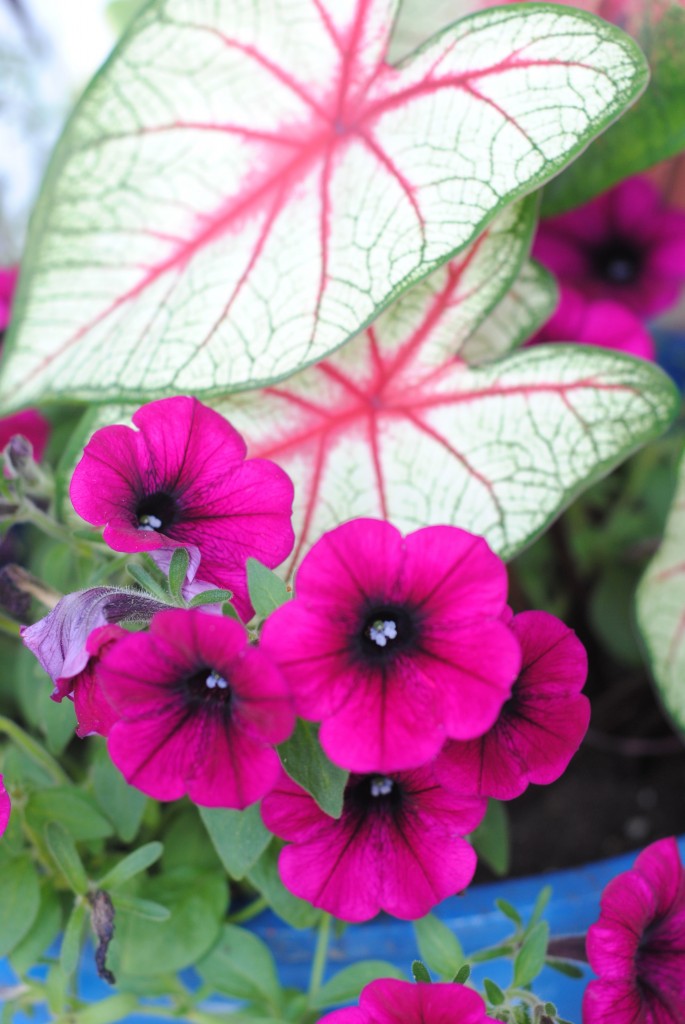

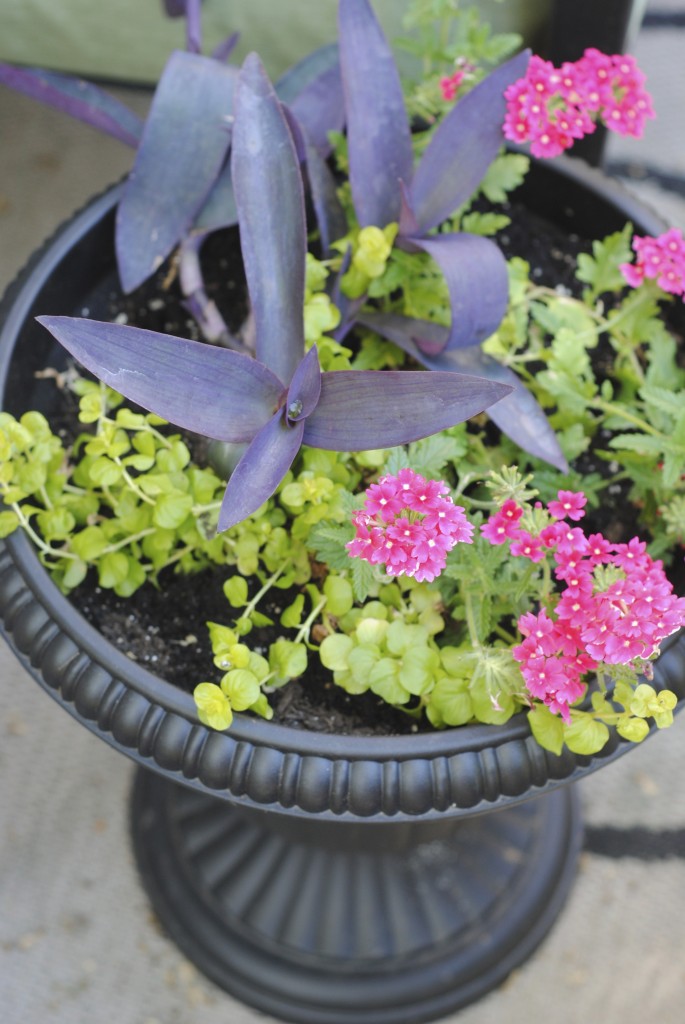
My deck receives more light, so I have a different combination out there. Still only three plants, but wow, such stunners! Keep in mind they’ll fill out quite a bit in a few weeks, I left a little breathing room between plants to allow for growth.

If you aren’t sure which plant hardiness zone you’re in, use the USDA Plant Hardiness Zone Map to find out. Simply enter your zip code to get your precise zone information.
2. Choose the right containers
The type of container you choose plays a crucial role in the success of your plants. Size matters—larger containers hold more soil, which helps retain moisture and provides ample room for root growth, preventing plants from becoming root-bound. Drainage is equally important, as excess water can lead to root rot. Always select containers with drainage holes, or drill some yourself if needed. The material of the planter also makes a difference; terra cotta pots are breathable but dry out quickly, while plastic or resin containers retain moisture better. Consider self-watering planters for added convenience, especially in hot climates where soil dries out faster. Choosing the right container not only supports plant health but also enhances the overall look of your outdoor space.
3. Use Quality Potting Mix & Save on Soil With Fillers
Using the right potting mix is essential for healthy container gardens. Unlike garden soil, which can be too dense and compact, a high-quality potting mix is lightweight, well-draining, and packed with the nutrients your plants need to thrive. To improve drainage and aeration, consider adding perlite or vermiculite to the mix. A good potting mix helps retain the right amount of moisture while allowing excess water to drain away, preventing root rot and other common container gardening issues.
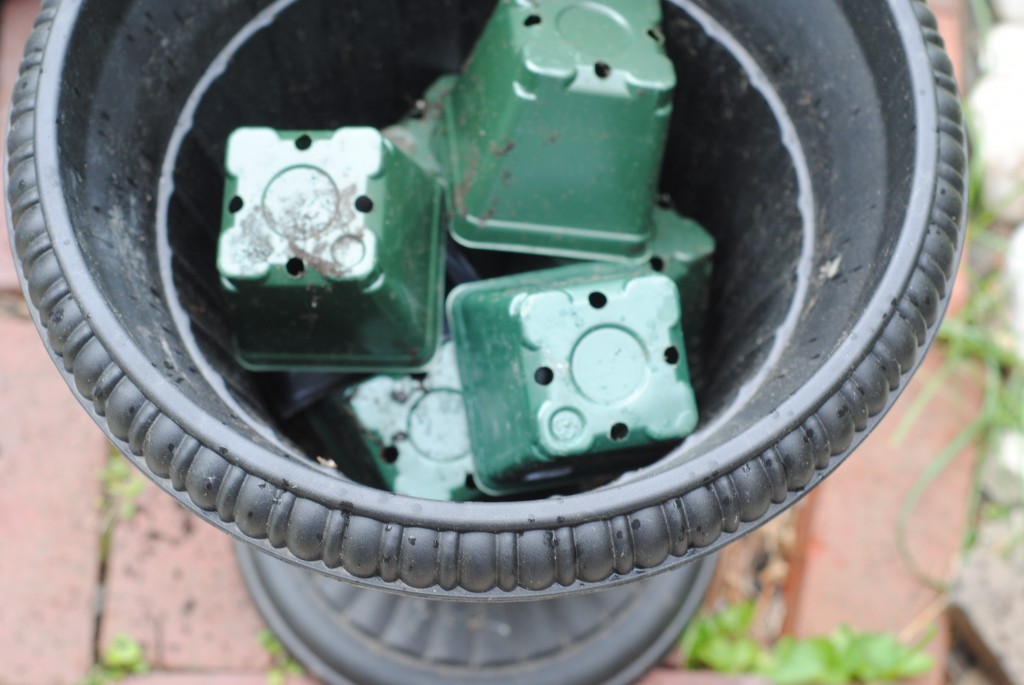
Filling an entire large planter with soil isn’t always necessary—and it can be both expensive and heavy. A great way to save money and make your containers easier to move is by using a filler at the bottom of the planter. Items like empty plastic water bottles, upside-down plastic plant pots, or even pieces of pool noodles create a base that takes up space while still allowing for proper drainage. Just be sure not to block any drainage holes. This trick ensures your plants have plenty of soil in the top two-thirds to support healthy root growth while keeping your planters lighter and more manageable.
4. Find a Winning Color Palette
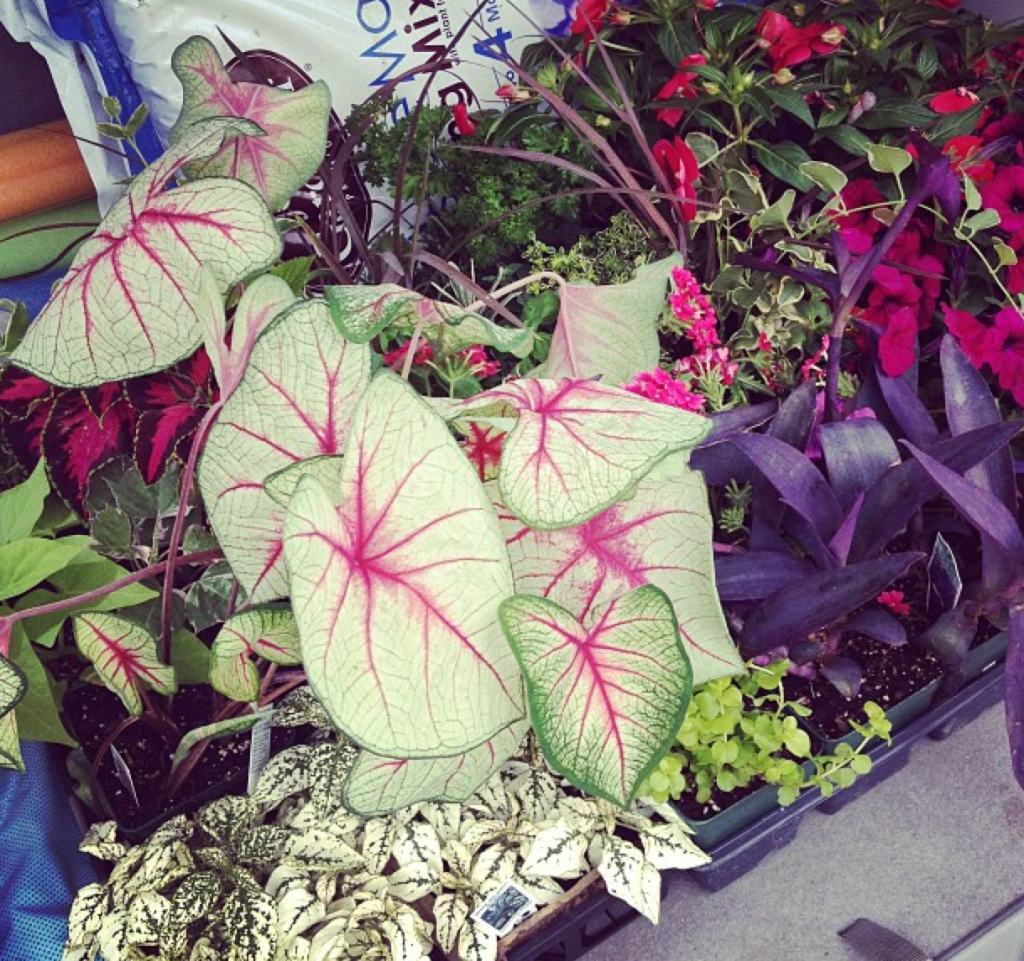
When I hit the farm to get my plants, I try to group plants in threes with contrasting yet pleasing color combos. Group plants with similar needs to simplify maintenance. Choose companions that require the same water, light, and nutrients for optimal growth. Try mixing plants containing these shades:
- light or chartreuse green (like Creeping Jenny, Golden Coleus, or Sweet Potato Vine Marguerite)
- dark purple leaves (like Dracana Spikes or Purple Queen)
- silver sage leaves (like Lambs Ear or Silver Edge Lavender)
- bright, bold flowers (like Petunias, New Guinea Impatiens, Verbena, Vinca)
- variegated leaves (like Vinca Vine, Tricolor Sweet Potato Vine, or Caladium)
When I’m at the nursery, I group my plants together and play with the colors until I love them. Then I load up my car and have a trunk full of happiness.
5. Follow the Thriller, Spiller and Filler Rule
Your ‘thriller’ is the knockout punch of the group, usually the tallest. A ‘spiller’ is one that will trail down the sides of the planter. Your ‘filler’ is what goes in between to add lushness to your arrangement. I love using wave petunias or another bold flower for this one. Here are two recipes that always work for me.
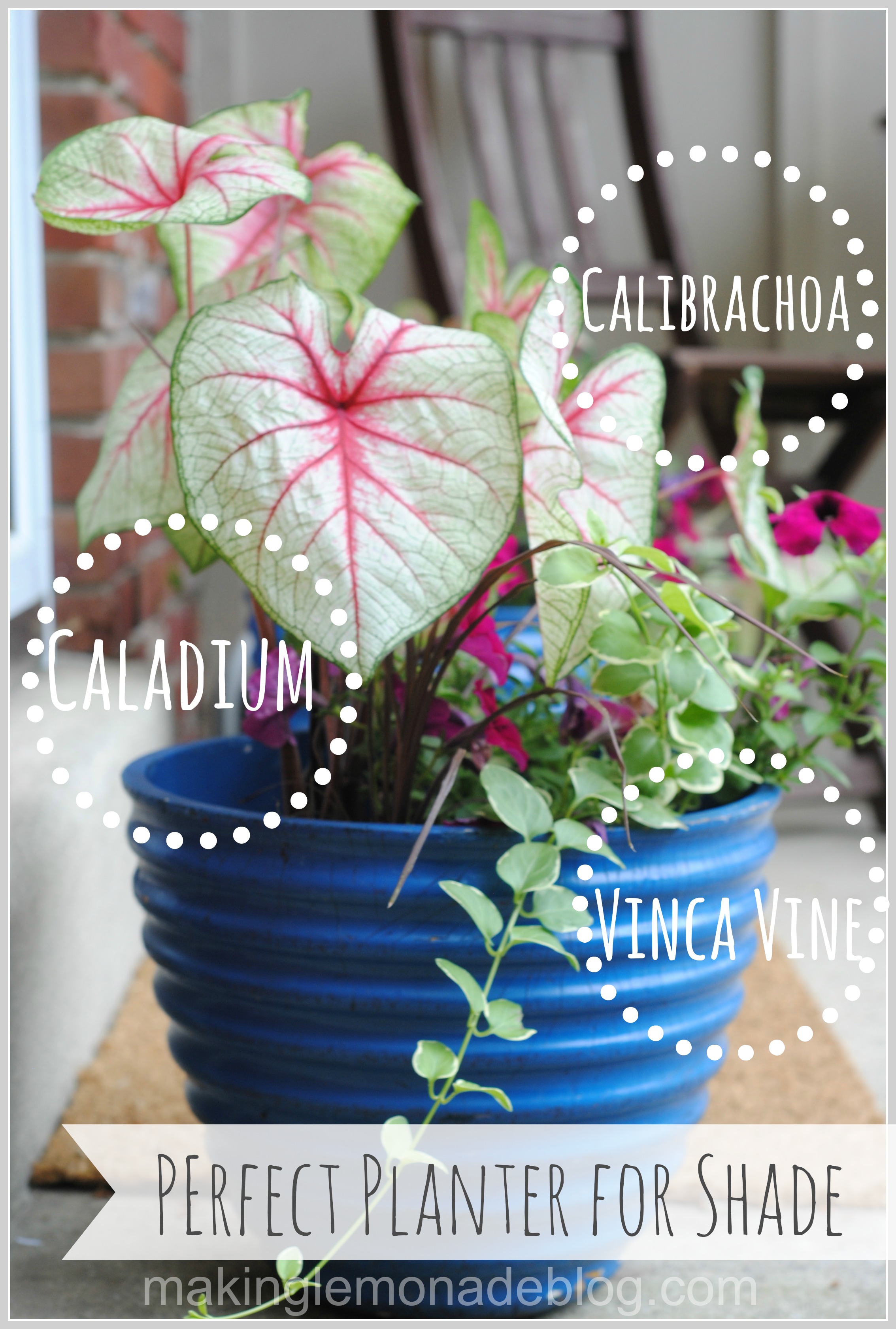
My shady front porch planters get the following plant combination:
- Thriller: Caladium
- Spiller: Vinca Vine
- Filler: Calibrachoa (and also a small Dracaena Spike, barely visible here)
For a lush, oversized planter filled with shade-loving tropical beauty, consider this plant combination:
- Thriller: Hawaiian Ti Plant
- Filler: Caladium
- Spiller: Creeping Jenny

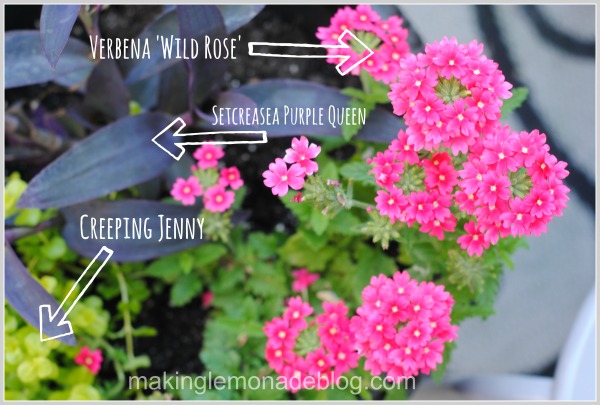
On my deck, which gets sun to part shade, the following plants work like a charm:
- Thriller: Setcreasea Purple Queen
- Filler: ‘Wild Rose’ Verbena
- Spiller: Creeping Jenny
6. Give Your Container Gardens the Proper Care
Once you find the perfect plant combination, consistent care is key to keeping your container garden thriving. Rotate your planters occasionally to ensure all sides receive equal sunlight, promoting balanced growth. Regular pruning and deadheading encourage new blooms, prevent legginess, and keep plants looking their best. Tall or vining plants may need stakes for support to prevent them from toppling over. Watering is also essential—check the soil often and water deeply when the top inch feels dry, preferably early in the morning to reduce evaporation and prevent mildew. Since container plants rely on you for nutrients, apply a balanced liquid fertilizer every few weeks or use a slow-release option to keep them well-fed throughout the season. With proper care, your container gardens will continue to flourish with healthy, vibrant plants.
There’s my top 6 tips for stunning container gardens. And wow, you just can’t believe how much a little elbow grease will pay off all summer long! The transformation in my entryway alone takes my breath away every time I come home.