How to Create a Successful Morning Routine for All Kids
This post may contain affiliate links for your convenience. Read my full disclosure policy here.

Mornings can often feel like a race against the clock, with parents juggling wake-ups, breakfasts, and getting kids out the door. Without a plan, the chaos can feel overwhelming, and it’s easy for kids—whether neurotypical or neurodivergent—to get off track. A thoughtful, personalized routine can transform mornings from stressful to smooth.
In this post, we’ll dive into how morning routines differ for neurotypical and neurodivergent kids, provide actionable steps to create a system that works for your family, and share a free printable morning routine checklist to aid your child in getting ready. With options for both words and pictures, this checklist can be adapted for readers and pre-readers alike.
Understanding Morning Routine Needs
Before creating a morning routine, it’s important to understand what your child needs to succeed. If your family looks anything like mine, then you have two different kids with two very different sets of needs. One of my children wakes up to their alarm each morning, gets themselves ready without any prompting, prepares and eats their breakfast and always remembers to wear shoes on P.E. day. The other child… well… let’s just leave it at they’re very different kids. And that’s okay! Finding a good morning routine for your child will vary based on factors such as their age, level of independence, temperament and neurodivergent needs.
Neurotypical Kids
Neurotypical children generally thrive on structure and consistency. They often benefit from clear expectations and a few gentle reminders to stay focused. These children are more likely to adapt to a basic routine without much additional support, though they still need guidance and encouragement along the way. If you can create some good habits while they are young, these kids will easily pick up a good routine and usually become independent fairly quickly.
Neurodivergent Kids
For neurodivergent children—such as those with ADHD, autism, or sensory processing challenges—mornings can be especially overwhelming. Transitions between tasks may be difficult, instructions might feel confusing or too demanding, and sensory sensitivities can impact their ability to focus. A successful routine for neurodivergent kids often includes visual aids, sensory accommodations, and smaller, clearly defined steps.
Both groups benefit from predictability, but neurodivergent children may need extra tools and flexibility to feel comfortable.

How to Streamline Your Child’s Morning Routine
Whether your child is neurotypical or neurodivergent, a streamlined routine can reduce stress and help everyone start the day on the right foot. Here’s a step-by-step guide to creating a system that works for your family:
1. Start the Night Before
Preparation is the foundation of a smooth morning. Before bedtime, tackle tasks like:
• Laying out clothes for the next day. We use a hanging closet organizer to prep clothes for the whole week.
• Packing backpacks with completed homework, books to return, etc.
• Preparing lunch boxes, snacks and water bottles. You can fill the water bottles half full in the evening and add ice in the morning.
For neurodivergent kids, previewing the next day’s schedule can help reduce anxiety. Use a visual calendar or verbally walk them through what to expect. If they have a special event or after-school activity, remind them of that.

2. Create a Visual Morning Routine
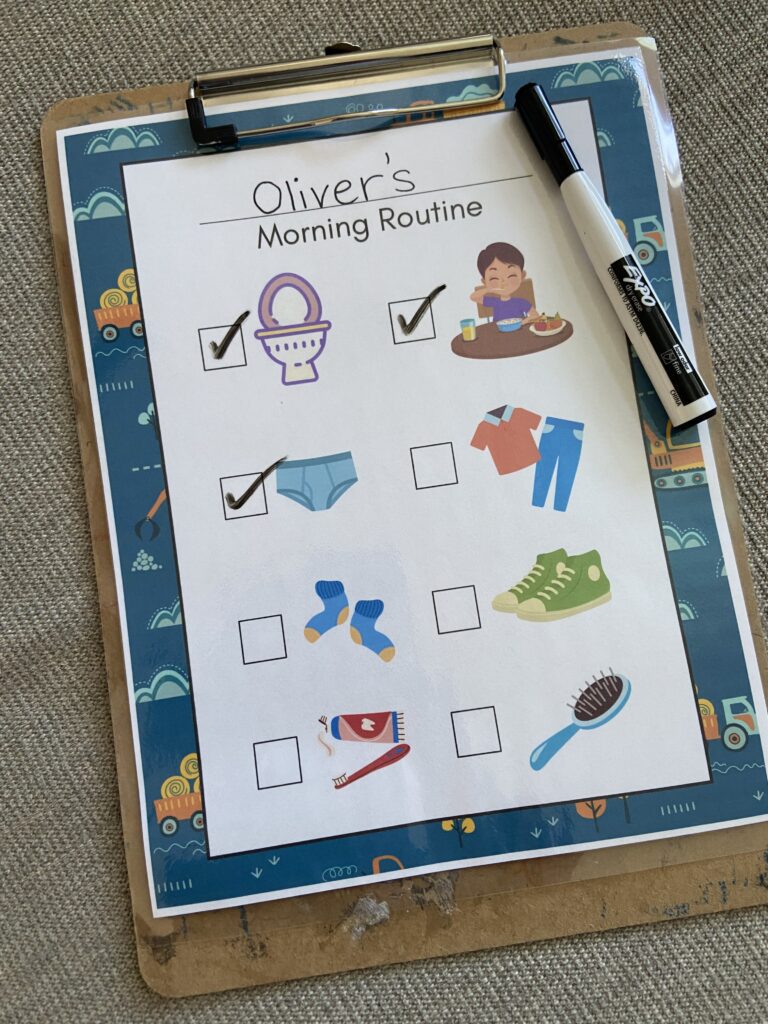
Children thrive on predictability, and a visual checklist can help them stay on track. You can download one of our free printable morning routine checklists below—either a text-based version for readers or a picture-based version for pre-readers.
The checklist should include every task your child needs to complete, even the small ones. This list will look different based on the child’s age and abilities. For example, while one child may be successful with “Get Dressed” as the prompt, another child may need five separate prompts for each article of clothing to successfully get dressed. Both are okay, but be ready to adjust based on your child’s needs.
Keep the checklist simple and accessible, placing it in a location where your child can easily reference it (e.g., taped to their bedroom wall or on a clipboard on their bathroom counter).

3. Break Tasks into Manageable Steps
Instead of asking your child to “Get ready for school,” break the process into smaller, actionable steps. For example:
• “Put on your socks.”
• “Now put on your shoes.”
• “Brush your teeth next.”
This is especially beneficial for neurodivergent kids, who may struggle to process multi-step directions. For these children, breaking down tasks into bite-sized pieces can make the process feel less overwhelming.

4. Incorporate Sensory Supports
Some children, particularly those who are neurodivergent, may have specific sensory needs in the morning. Addressing these needs can help your child feel regulated and ready to transition between tasks.
•For sensory seekers: Incorporate movement into the morning routine, such as jumping jacks, stretching, swinging or walking on a sensory path.
•For sensory avoiders: Minimize overstimulation by dimming lights, reducing noise, or providing noise-canceling headphones.

5. Use Timers or Music
A timer can be a helpful tool to keep kids on track. For neurotypical kids, turning the routine into a game (e.g., “Let’s beat the timer!”) can motivate them to move efficiently.
For neurodivergent kids, consider using a visual timer that shows the passage of time or play calming background music to help them transition more smoothly.
6. Offer Positive Reinforcement
Children respond well to praise and encouragement. Celebrate small wins, such as completing tasks on time or staying focused. My son loves to snuggle, so sometimes saying something like, “Let’s get those teeth brushed and then we can spend a few minutes snuggling,” can serve as a motivator. Find what motivates your child and use it to encourage them to keep moving along.
7. Build in Extra Time
Mornings rarely go perfectly, so plan for hiccups by building in extra buffer time. This is particularly important for neurodivergent children, who may need more time to transition between tasks or handle unexpected changes. I added an extra thirty minutes to our morning routine and it has helped us so much. My slower child is able to move at a pace that is more comfortable for him and all of us are less stressed.


Free Printable Morning Routine Checklist
To help streamline your mornings, I’ve created a free printable morning routine checklist. This tool is available in two versions:
- Text-Only Checklist: Ideal for children who are comfortable reading and prefer written instructions. There are blank lines so you can personalize your checklist and four border options to fit your child’s preferences.
- Picture-Based Checklist: Perfect for pre-readers or kids who respond better to visual cues. There are four border options included to fit your child’s preferences.
Place the checklist in a location where your child can easily reference it each morning. Simply print the checklist, add your child’s name at the top and any additional tasks and then laminate it so that it can be reused each day. Grab a clipboard and a dry erase marker so your child can mark off the tasks as they go.
Tips for Success
•Be Consistent: Stick to the same routine each morning. Over time, the repetition will help your child feel more confident and independent.
•Stay Flexible: While consistency is important, it’s also okay to adapt the routine as needed. If something isn’t working, tweak it until you find a better solution. Every child is different and what works for one won’t necessarily work for another.
•Involve Your Child: Give your child some ownership over the routine by letting them help design their checklist or choose the order of their tasks.
Why a Streamlined Morning Routine Matters
Mornings set the tone for the entire day. A well-organized routine not only reduces stress for parents but also gives kids a sense of accomplishment and readiness. By tailoring your approach to meet your child’s individual needs, you’re fostering independence and setting them up for success.
Whether your child is neurotypical or neurodivergent, the key is finding what works best for them—and sticking with it. Small changes can make a big difference, and with tools like our printable checklists, you’re well on your way to calmer, more manageable mornings.